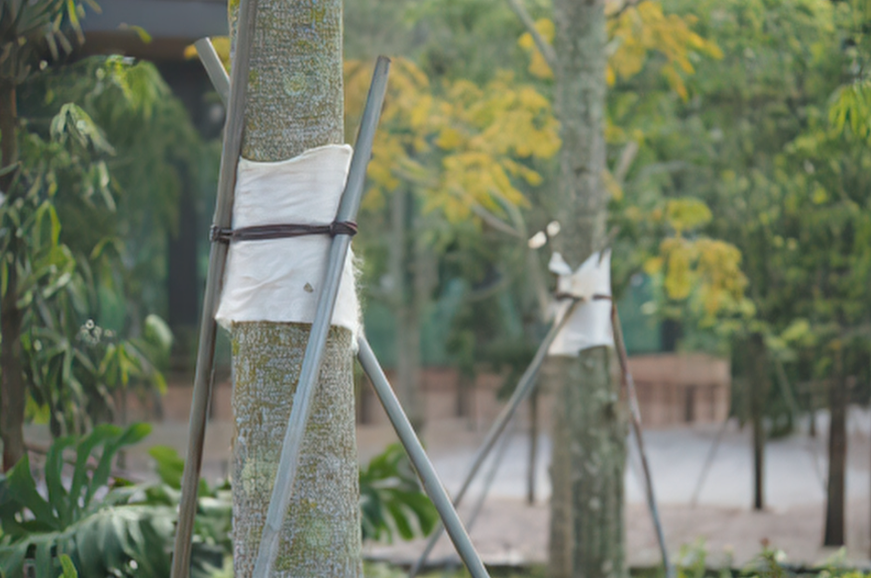
Some newly planted trees benefit from seasonal trunk protection, particularly young, thin-barked trees exposed to strong winter sunshine. However, trunk wrapping should address a specific risk rather than become a permanent covering for every tree.
Light-coloured commercial tree wraps or suitable white guards can help reduce winter sunscald by reflecting sunlight and moderating bark temperature changes. Install protection in fall and remove it in spring, depending on local conditions and the product’s instructions.
The right choice depends on the tree species, bark maturity, location, and exposure to animal damage.
How Does Winter Sunscald Happen?
Winter sunshine can warm exposed bark, particularly on the south and southwest sides of a trunk. A subsequent temperature drop can injure vulnerable tissue.
Young trees with thin bark are especially susceptible because they have less protection than mature trees with thicker bark. A newly planted tree in an open, sunny location may therefore need different care from an established tree in a sheltered setting.
Trunk protection helps manage this temperature exposure. It does not insulate the entire tree or guarantee protection against every form of winter injury.
What Type of Trunk Protection Should You Use?
Choose a product designed for tree protection and suited to the problem you are addressing. For sunscald prevention, white or reflective protection is preferable to dark materials that absorb sunlight.
Suitable options may include:
- White commercial tree wrap.
- Properly sized white tree guards.
- Separate protective cages where animal browsing is the main concern.
Avoid substituting tightly wound household plastic, adhesive tape, or dark coverings. Protection should not constrict the trunk, rub the bark, or remain unchecked as the tree grows.
A guard intended for sunscald is not automatically adequate protection against every animal.
When Should You Install and Remove Wrapping?
Install seasonal protection in fall before winter exposure becomes a concern. Remove seasonal wraps in spring when the risk of winter injury has passed, following local guidance.
Leaving wrapping in place indefinitely can conceal problems and interfere with routine bark inspection. Check the trunk when removing protection and look for rubbing, trapped moisture, damage, or constriction.
Some vulnerable trees may benefit from protection over several winters. Reassess each year rather than assuming one season is enough or that the same covering should stay installed permanently.
Will Wrapping Stop Rabbits and Rodents?
Some guards help protect against chewing, but effectiveness depends on the material, fit, and animals involved. Thin wrap should not be treated as a reliable substitute for a properly designed animal barrier.
Where browsing is a concern, consider a suitable guard or cage with clearance around the trunk. Account for snow accumulation, which can allow animals to reach bark above a low barrier.
Inspect protection during winter. Adjust a guard that shifts, presses against the trunk, or leaves vulnerable bark exposed.
What Else Helps Newly Planted Trees Through Winter?
Trunk wrapping is only one part of tree care. Maintain appropriate moisture as conditions require, keep mulch away from direct contact with the trunk, and inspect planting ties or supports for rubbing.
Protection should match the tree’s actual needs. A tree with mature bark and little exposure may not benefit from the same treatment as a thin-barked tree in an open location.
When the species or cause of existing bark damage is unclear, seek an assessment before covering the trunk. Appropriate seasonal protection works best when it complements good planting and ongoing maintenance.